Project 35.003 – Structure and Sub-Grade Corrosion Management
Objective
The performance and longevity of overhead transmission structures and their foundations are governed by material properties, environmental exposure, soil chemistry, and electrical influences such as stray or circulating currents. The objective of this project is to improve utility understanding of these corrosion drivers and their impact on asset durability, thereby supporting informed decisions in design, installation, and maintenance to meet anticipated service life expectations.
This research will deliver actionable guidance on state-of-the-art methods and technologies for evaluating and mitigating corrosion-related degradation of transmission line infrastructure. (POF, SWS)
Research Value
- This research improves utility understanding of corrosion mechanisms affecting overhead transmission structures and foundations by integrating material properties, soil chemistry, environmental exposure, and electrical influences under field-relevant conditions.
- The project supports more accurate service‑life estimation and risk‑based asset management by linking observed degradation to governing corrosion drivers.
- The results enable utilities to optimize inspection, maintenance, and mitigation strategies, reducing unplanned outages, premature replacements, and life‑cycle costs.
- The research delivers practical, defensible guidance on current technologies and techniques for assessing and managing corrosion in transmission infrastructure.
- The outcomes enhance system reliability, safety, and long‑term sustainability of transmission assets. (POF, SWS)
Approach
This project addresses subgrade and aboveground corrosion affecting transmission line structures by equipping utility personnel with practical tools, validated methodologies, and technical insight to support informed, defensible, and cost effective asset management decisions. To accomplish these objectives, EPRI plans to execute the following tasks in 2027:
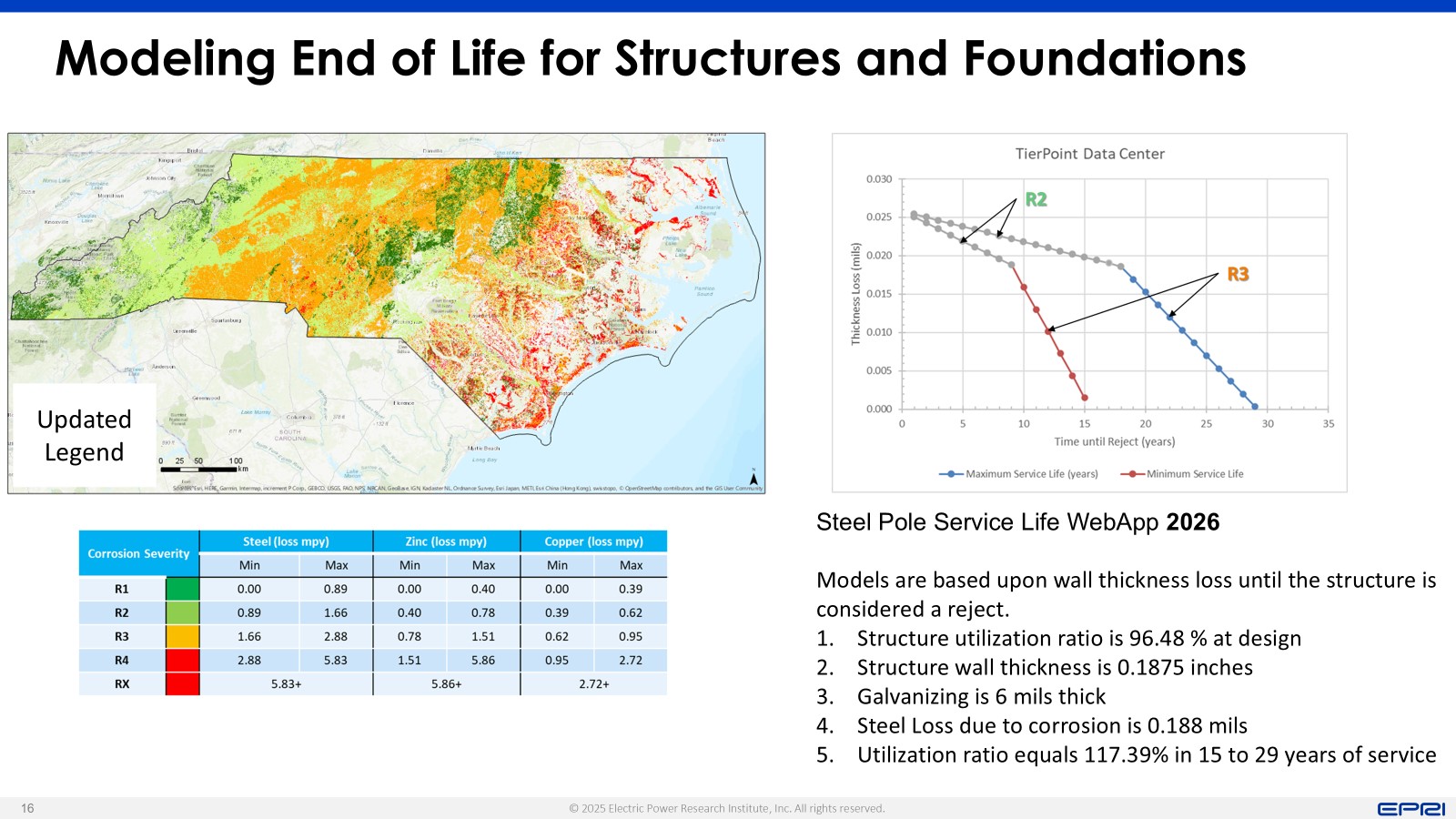
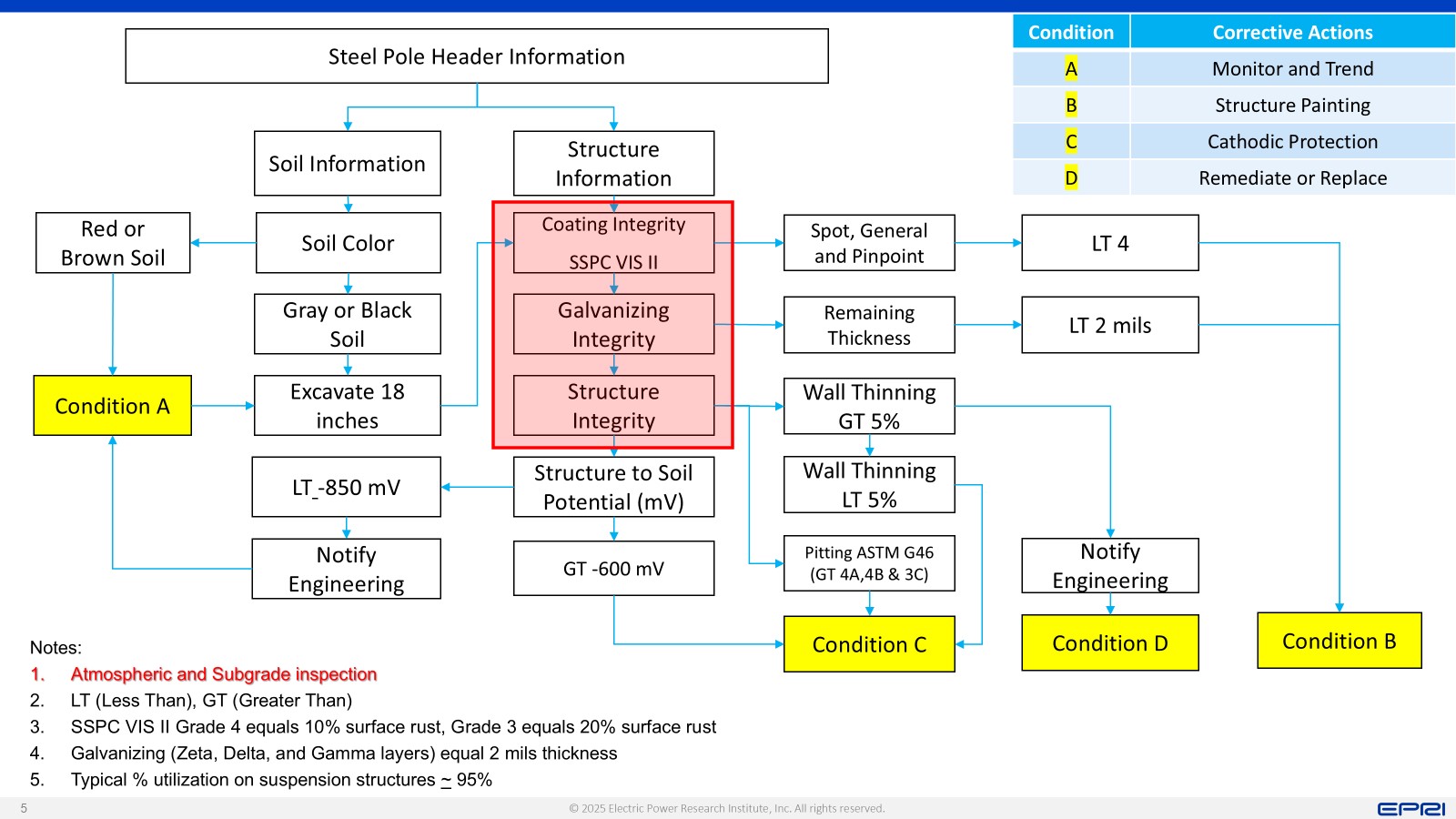
Development of a Web-Based Steel Pole Strength Loss Calculator: Utilization ratios are a key metric for determining whether corrosion-related section loss has rendered a steel pole unacceptable for continued service. This task will deliver a structure health assessment tool in the form of a web-based calculator designed for asset managers, engineers, and maintenance personnel. The calculator will integrate inspection data describing corrosion damage, structural loading criteria, original design parameters, and environmental inputs related to soil corrosion rates to evaluate remaining structural capacity. EPRI plans to deploy this tool on the Transmission Resource Center in 2027.
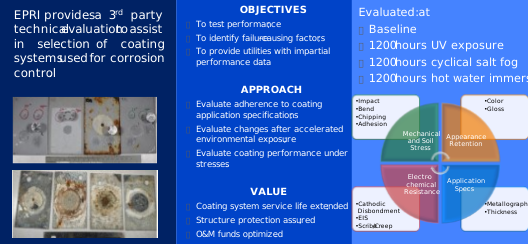
Evaluation of New and Emerging Coating Systems for Atmospheric, Subgrade, and Marine Environments: EPRI annually evaluates new and emerging coating systems for potential inclusion in its coating library. While many systems are intended for factory applications, others are suitable for field repair and refurbishment. This task enables utilities to select coating systems optimized for performance within their specific service environments. Results will be incorporated into updates of the web-based Coating Selection and Application tool hosted on the Transmission Resource Center.
Fleet Management of Overhead Transmission Line Structures: Effective fleet management requires not only inspection and maintenance practices, but also analytical auditing to identify optimal approaches for modeling degradation and extending structural service life. This task will enhance existing modeling capabilities by incorporating the effects of topography, surface water, and groundwater into soil corrosivity maps and predictive models.
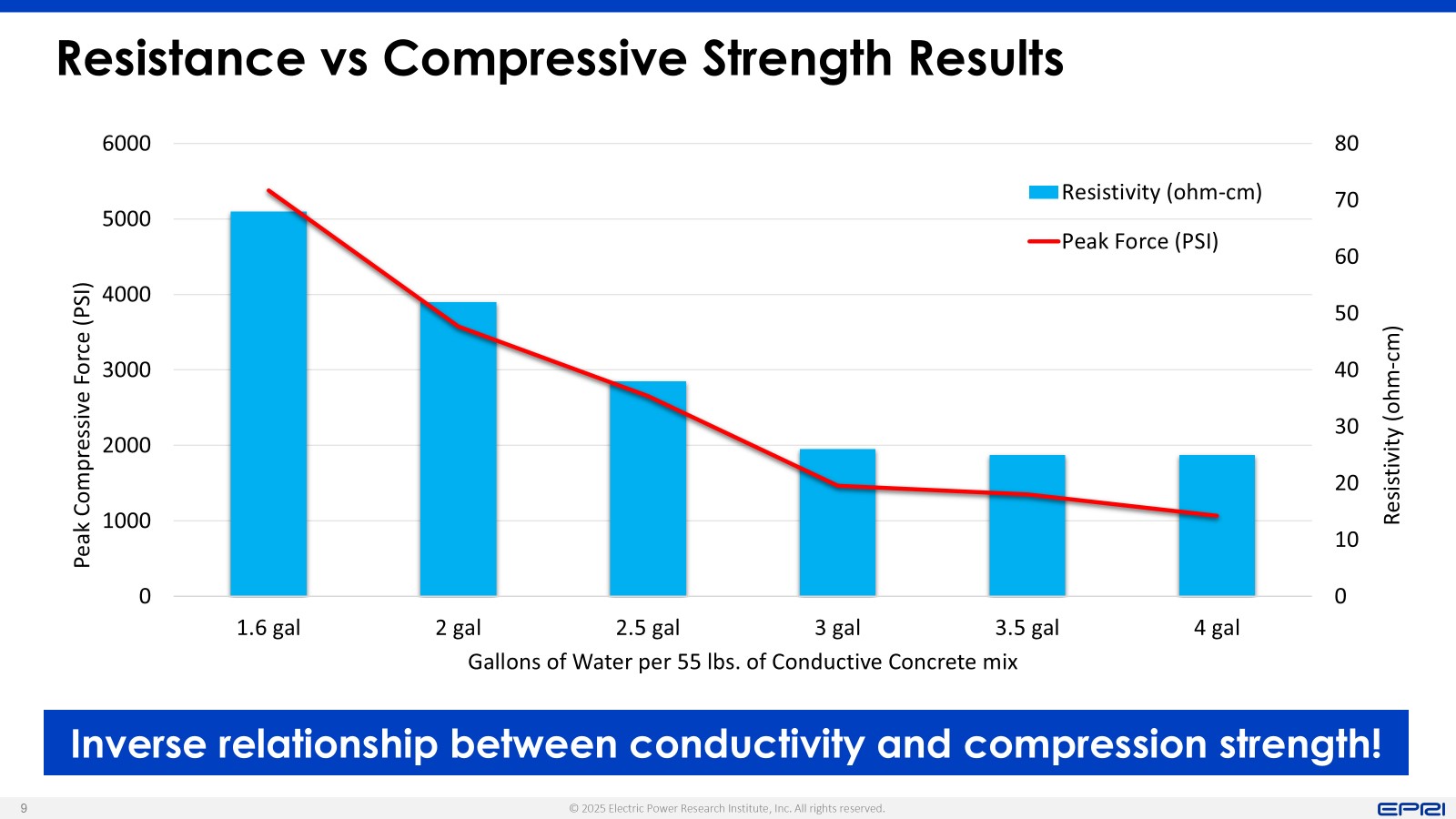
Engineered Backfills and Conductive Concrete: Research conducted to date indicates that electrical conductivity and compressive strength exhibit an inverse relationship as the water-to-cement ratio is varied. This finding enables both grounding and structural engineers to identify balanced design solutions that optimize cost and performance. The task involves aging concrete cylinders containing embedded steel coupons representative of reinforcing steel, followed by periodic corrosion rate measurements. These measurements are validated through coupon removal and mass loss determination using gravimetric analysis.
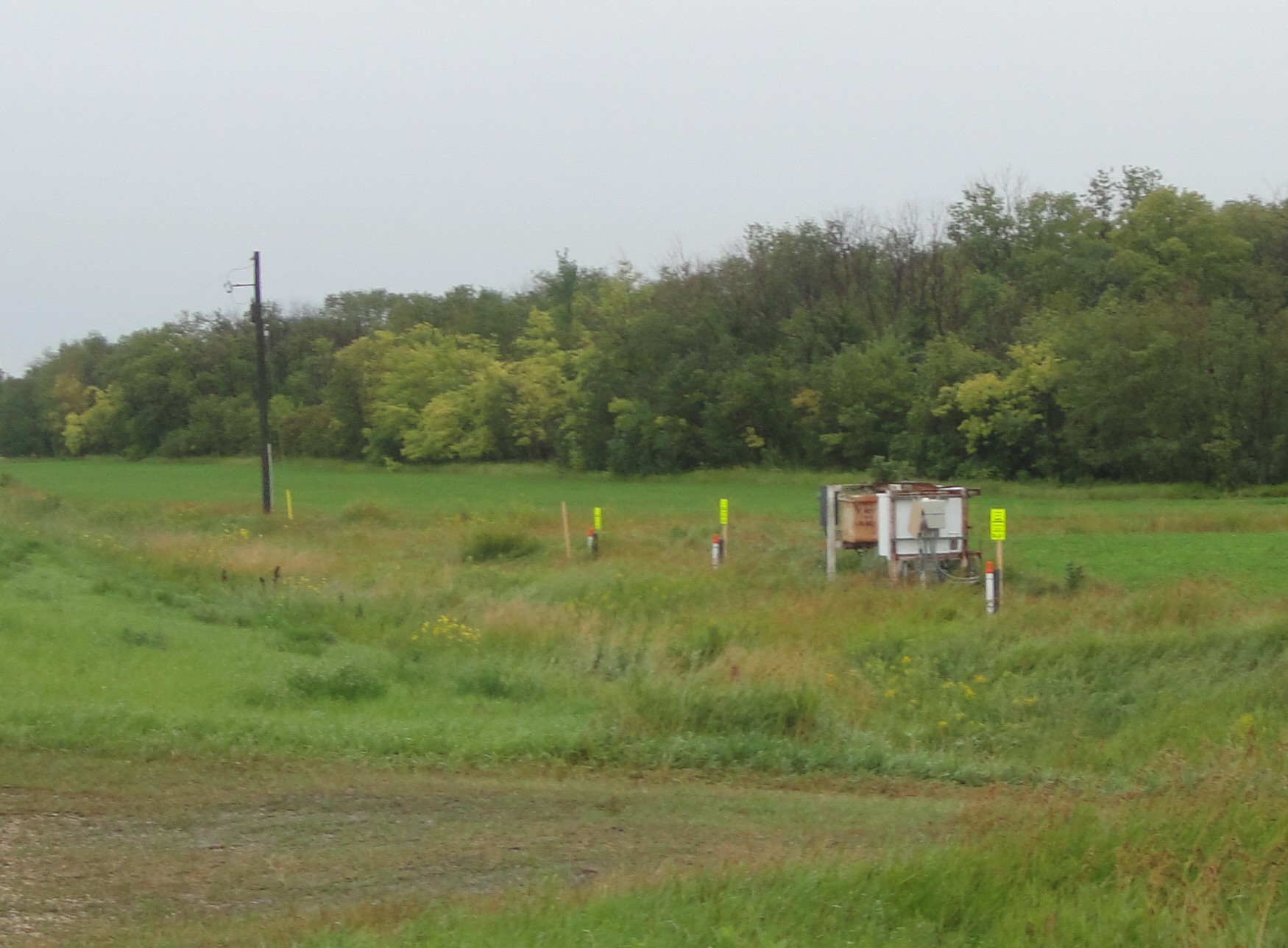
Corrosion from Stray Direct Currents and Circulating Alternating Currents: This task continues research initiated in 2025 to evaluate emerging methods and technologies for identifying and quantifying corrosion currents associated with stray DC and induced AC interference. The resulting insights will enable utility advisors to implement more effective mitigation strategies and extend the service life of affected assets.
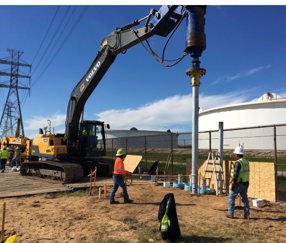
Investigate Degradation of Anchors and Helical Piles: This task explores the mode of failure for various anchor designs and helical piles to determine if that anchor is at risk due to stray or circulating current corrosion. This task is based upon new learning that will allow utilities to understand why anchor systems degrade and how to mitigate that corrosion. EPRI intends to focus research in 2027 on understanding circulating and stray currents in high soil resistivity and high ground water levels and publish the Anchor Management Guidelines.
Update the Corrosion Management Reference Book (The Rust Book): This reference book contains asset management information for inspection, assessment, mitigation, and remediation of corrosion on transmission lines. The reference book contains the fundamentals of corrosion, guidance for inspection and assessment, and mitigation methods that align with environmental conditions. EPRI intends on adding a new chapter focused upon the development and operation of the EPRI developed Corrosion Monitoring System (CMS) in 2027.
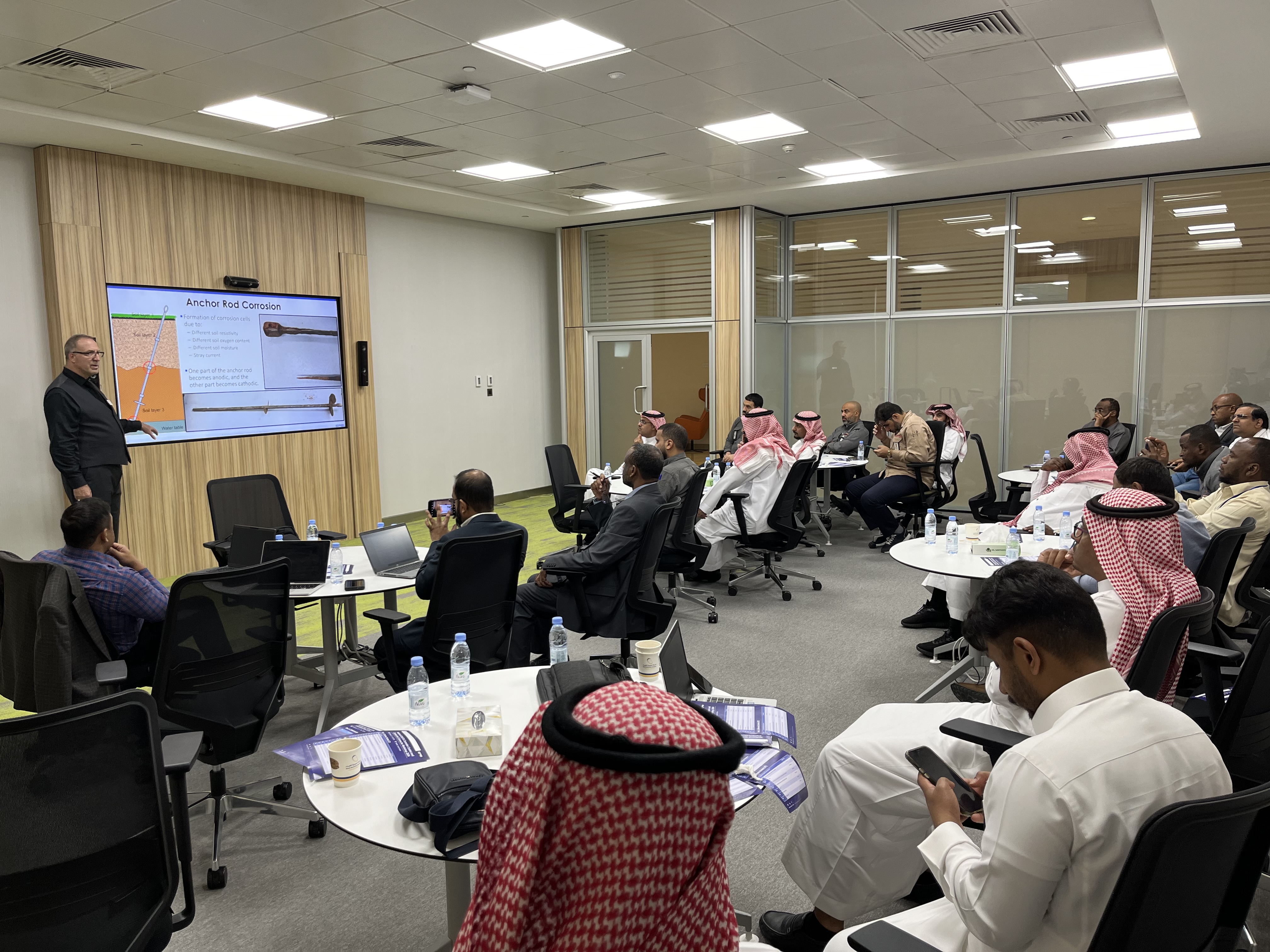
Corrosion and Corrosion Control Workshop: This workshop provides an understanding of corrosion fundamentals and the best-in-class methods for corrosion management. The fundamentals of corrosion include why corrosion initiates, what governs the severity and quantifies the environments in terms of corrosion rates. Hands on experiments are conducted to understand cathodic protection and how to inspect and quantify a condition assessment. The last segment focuses upon mitigation methods and how to effectively apply the appropriate method in each environment.
Provide Tools and Resources on the Transmission Resource Center: The following calculators, tools, result summaries and references are planned to be available on the Structure and Subgrade Corrosion Management Transmission Resource Center:
| Resource Title | Resource Type |
|---|---|
| Inspection and Assessment | Guide |
| Coating Selection and Assessment | Guide |
| Cathodic Protection Design and Installation | Calculator |
| Steel Pole Strength | Calculator |
| Corrosion Management Reference Book | Reference |
| Corrosion Monitoring System | Results Summary |
| New Life Cycle Decision Tools | Results Summary |
| Selection and Application of Coatings | Results Summary |
| EPRI Approach to Corrosion Monitoring | Results Summary |
| Innovative Cathodic Protection Application for Transmission Tower Concrete Foundations | Results Summary |
| Corrosion Monitoring System (CMS) | Results Summary |
| Steel Pole Inspection | Results Summary |
| Cathodic Protection and the Effects of Stray Current | Video Highlights |
Anticipated Deliverables
| Deliverable | Type | Date |
|---|---|---|
| Coating Selection and Application | Technical Update | 12/31/2027 |
| Engineered Backfills - Conductive Concrete Evaluation | Technical Update | 12/31/2027 |
| Steel Pole Management Suite Development: Steel Pole Strength Calculator WebApp | Technical Update | 12/31/2027 |
| Corrosion and Corrosion Control Workshop | Technical Update | 12/31/2027 |
Past EPRI Work on Topic
| Product ID | Title | Description | Published Date |
|---|---|---|---|
| 3002032707 | Conductive Concrete Development and Evaluation | Research has shown that conductive concrete has many benefits for grounding system augmentation, engineered backfills and possible use for EMP mitigation. | December 2025 |
| 3002029561 | Fleet Management Environmental Model Development: Locating and Modeling Structural Degradation Due to Soil Corrosivity | This technical report outlines the methodology of modeling service life of a structure using known soil corrosivity data. | December 2024 |
| 3002021805 | Corrosion Management Reference Book | This technical report provides an understanding of best-in-class inspection, assessment, and mitigation methods for power delivery assets. | December 2022 |
| 3002026947 | Locating and Modeling Structural Degradation due to Soil Corrosivity | This task develops environmental models and allows utilities to understand the levels of corrosion that could occur on the assets within their service territory. | December 2023 |