P35.012: Porcelain and Glass Overhead Transmission Line Insulators
Objective
As populations of porcelain and glass insulators approach or exceed their expected service life, utilities are seeking end-of-life metrics to prioritize maintenance and replacement programs. To achieve this, utilities need information on insulator performance (both new and in-service), strategies for determining replacements, and effective tools and technologies for inspection and assessment.
As utilities replace aging insulators, developments in glass insulator designs and changes in porcelain insulator manufacturing necessitate new training on the selection, application, and inspection of these insulators. Concerns have also been raised about the performance of new insulators from both traditional and non-traditional vendors. Additionally, many utilities that have not previously used glass insulators are now considering this technology. Recently, manufacturers have introduced factory-applied room-temperature vulcanized (RTV) silicone rubber coatings on glass insulators to enhance their contamination performance. However, there is limited information on the long-term performance of these coatings and their impact on inspection, assessment, and maintenance.
This project’s objectives are aimed at addressing the technical challenges associated with aging insulator populations and shifts in design and manufacturing by performing tasks to:
- assess new and novel designs (including rubber coatings) under representative in-service conditions,
- assess the overall condition of aging insulator populations,
- and support effective knowledge transfer.
Research Value
This project can provide the following benefits:
- assist in the selection, inspection, and maintenance of glass and porcelain insulators,
- offer information on insulator technologies, enabling lower-cost and/or improved technical solutions,
- enhance understanding of performance issues for existing and new insulators in contaminated environments, and provide strategies to address these issues,
- evaluate and identify high risk porcelain and glass insulators or populations of insulators before failure, helping to maintain a reliable electricity supply to the public.
Approach
In 2027, this project aims to enhance the industry’s knowledge of porcelain and glass insulators through the following initiatives:
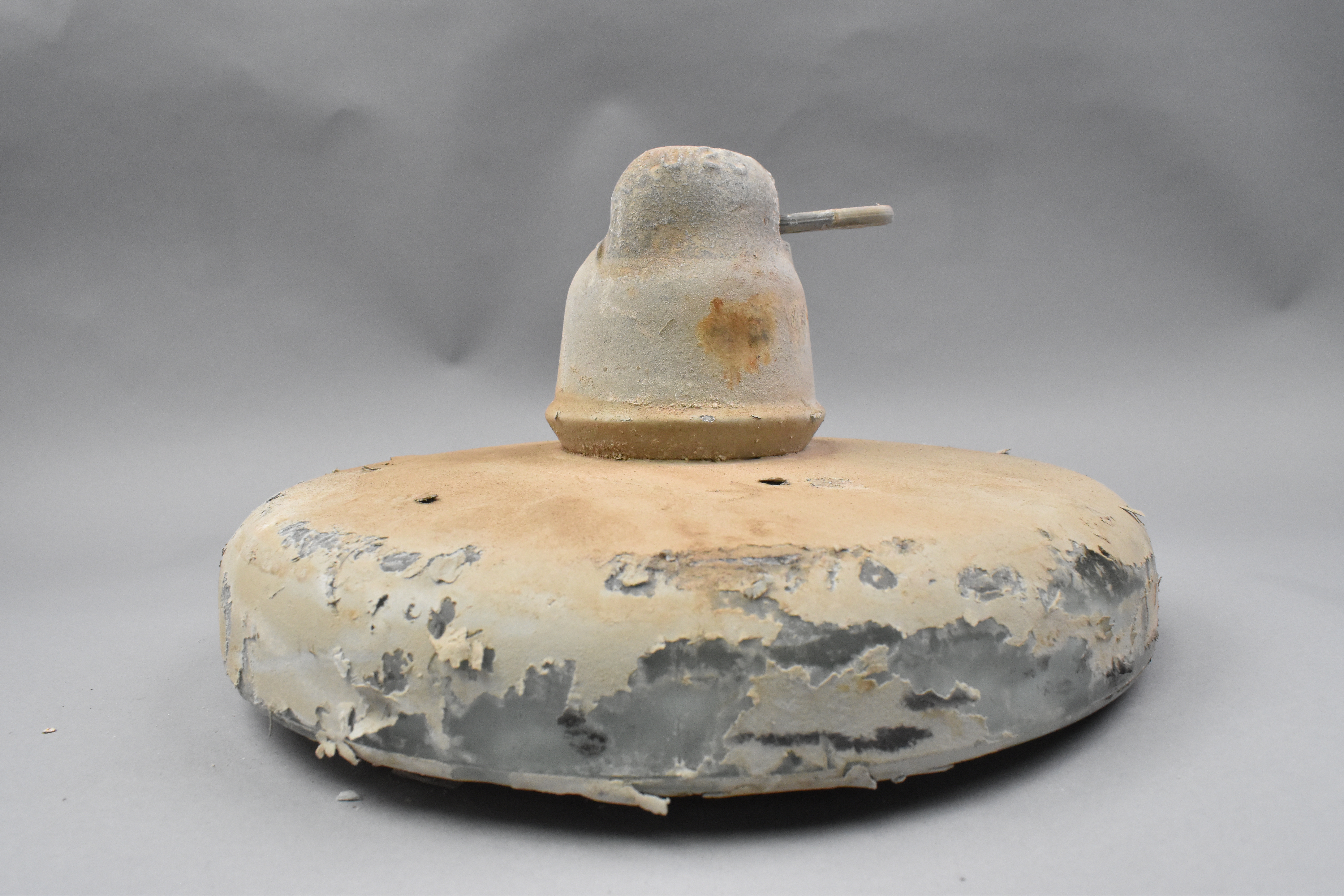
Evaluate the Performance of Rubber-Coated Insulators: Rubber coated glass insulators are relatively new with limited global experience. This task aims to collect information from utilities about the performance of rubber coated glass insulators used in their service territories. The information can help utilities develop informed guidance to reduce installation and handling damage, understand the useful lifespan of the rubber coatings, and evaluate if coating degradation introduces performance concerns at end of life.
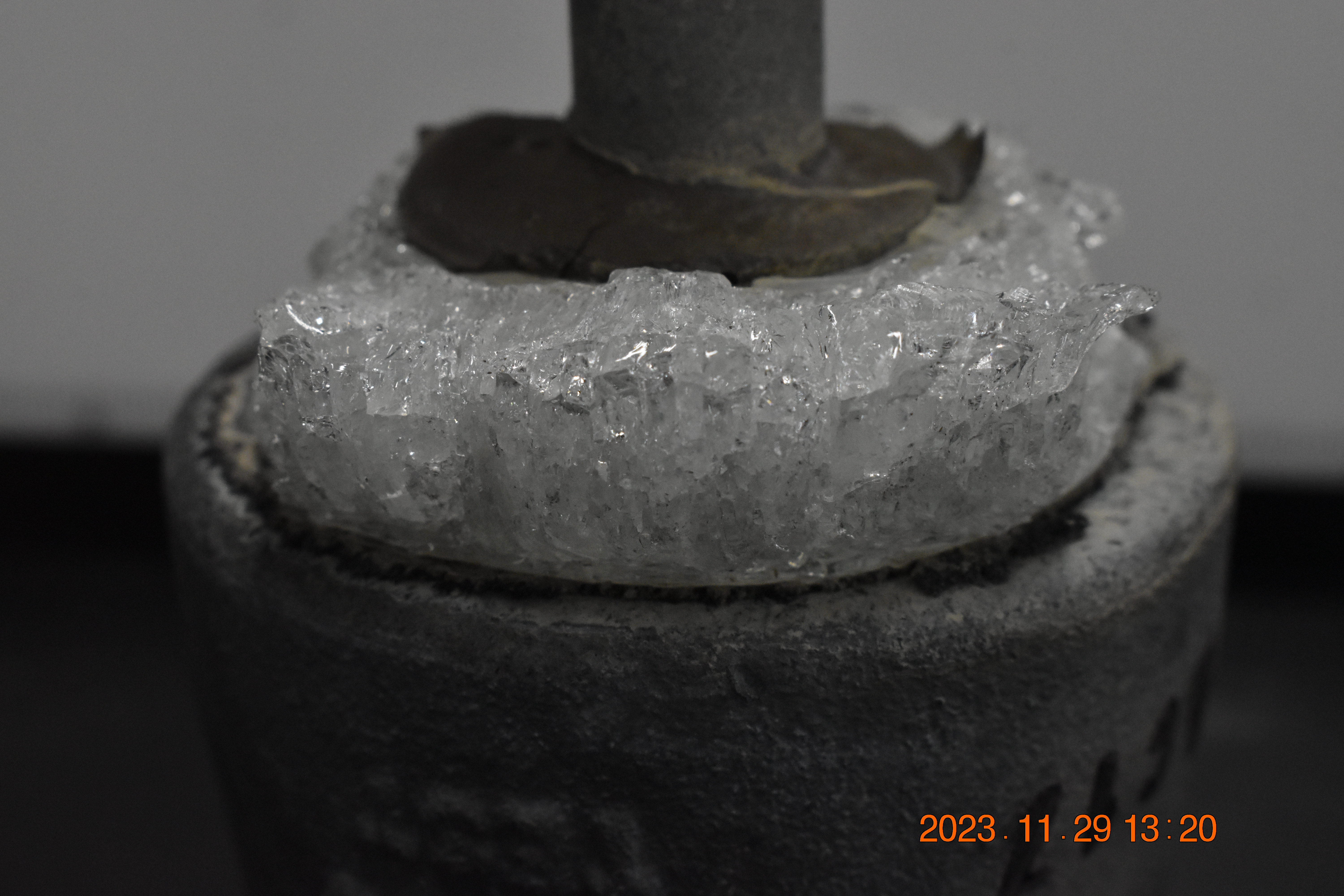
Study Glass Insulator Failure: As the use of glass insulators continues to increase, utilities are likely to experience a higher number of shattering incidents. Understanding the underlying cause helps the utility implement appropriate corrective actions. Because shattering typically destroys the insulator itself, post‑failure assessment relies heavily on examination of the remaining stub. EPRI is developing and refining methods to interpret fracture patterns in the residual glass to identify the cause of the shattering. Building on existing data and experience, this task aims to improve the accuracy and consistency of failure cause determination, enabling utilities to select more effective and targeted mitigation strategies.
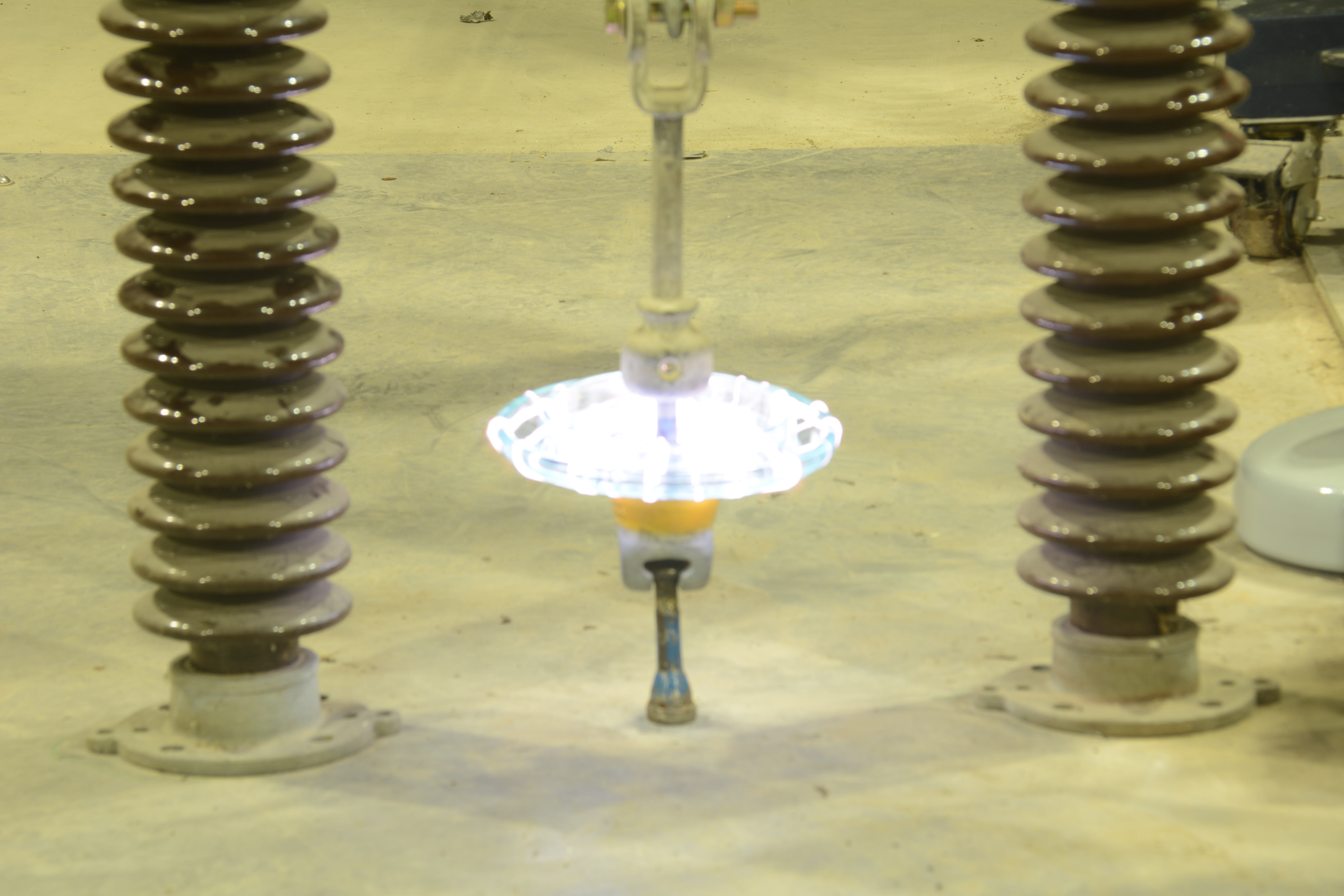
Using Steep Front Impulse Flashover Test to Assess Insulator Quality: Steep impulse testing is useful for assessing the quality of porcelain and glass insulators. As manufacturing location or technology changes over time there can be changes in insulator quality. Testing samples of new batches allows utilities to monitor these changes and identify potential quality‑related risks. In recent years, utilities have increasingly adopted glass insulators and EPRI intends to expand steep impulse testing of newly manufactured glass insulators to document performance characteristics and track quality trends over time.
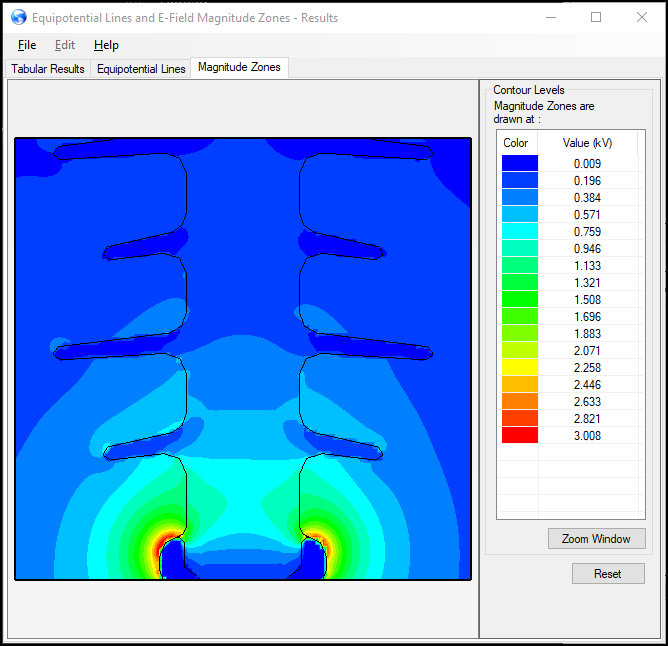
Update the Insulator Calculation Engine (ICE): With the emergence of rubber-coated glass insulators, controlling corona to reduce rubber degradation becomes crucial. This tool helps calculate electric field stress along an insulator string to determine the need for grading devices. EPRI continually updates this tool based on user feedback to ensure ease of use and relevance.
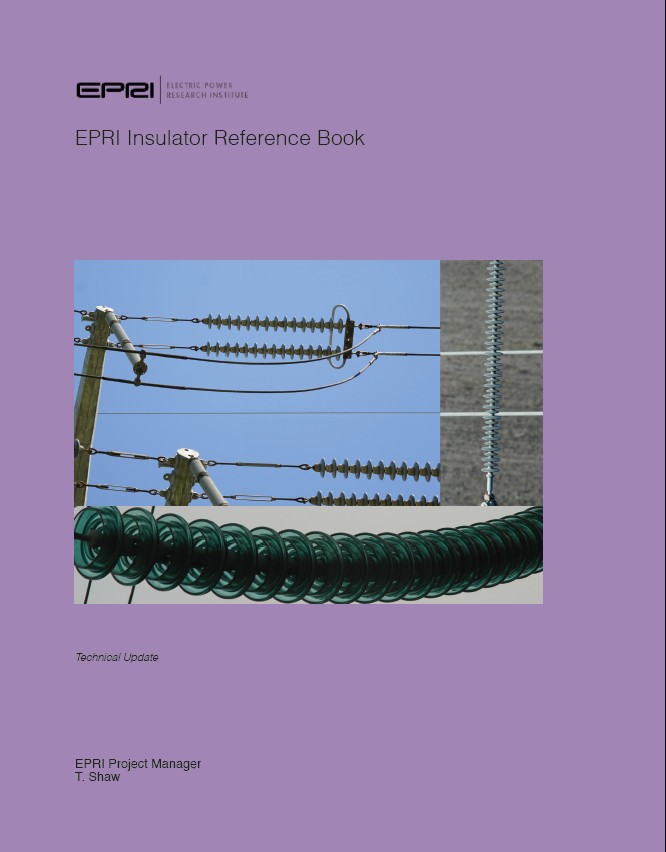
Update the Insulator Reference Book (The Violet Book): This comprehensive guide provides state-of-the-art information on insulator selection, inspection, and maintenance to help utilities better specify, install, and manage transmission line insulators. Revisions to the book intend to include mechanical considerations when selecting insulator for different configurations.
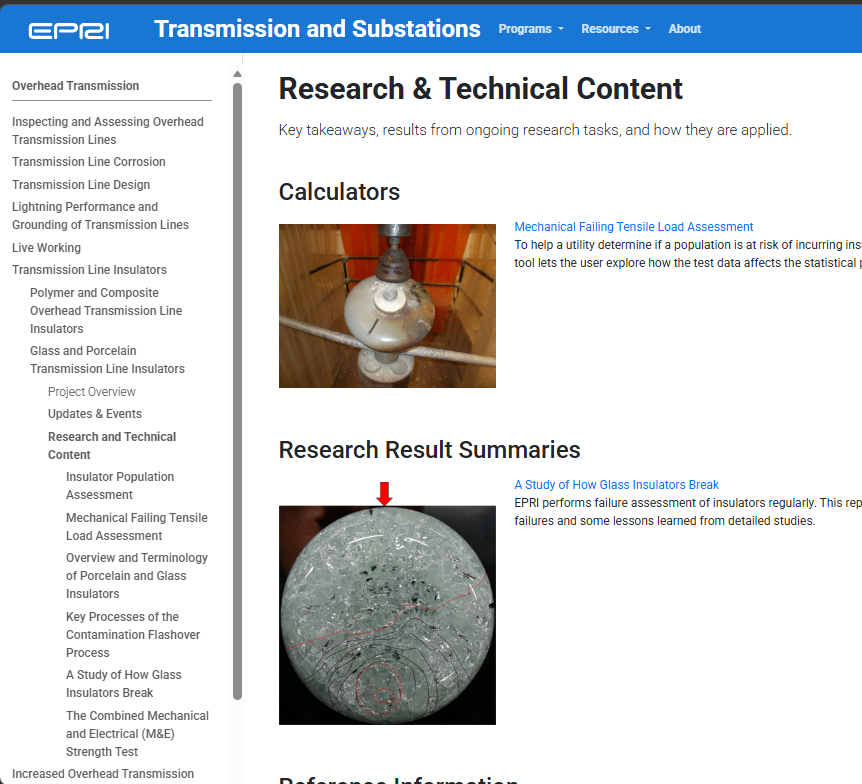
Provide Tools and Resources on The Transmission Resource Center: The following calculators, tools, result summaries, and references are planned to be available on the Glass and Porcelain Insulator Transmission Resource Center:
| Resource Title | Resource Type |
|---|---|
| Mechanical Failing Tensile Load Assessment | Calculator |
| A Study of Silicone Rubber Coated Glass Insulators: Comparing the Performance of Fully Coated and Bottom Coated Insulators | Result Summary |
| Lessons Learned from Porcelain Insulator Failures | Result Summary |
| A Study of How Glass Insulators Break | Result Summary |
| Insulator Reference Book (The Violet Book) | Reference |
| Overview and Terminology of Porcelain and Glass Insulators | Reference |
| Key Processes of Contamination Flashover Process | Reference |
| The Combined Mechanical and Electrical (M&E) Strength Test | Reference |
Anticipated Deliverables
| Deliverable | Type |
|---|---|
| Insulator Reference Book (The Violet Book) | Reference Book |
| Insulator E-field Modeling Software (Insulator Calculation Engine [ICE]) | Software |
| Study of the Performance of Rubber Coated Glass Insulators in Testing and In Service | Technical Update |
| Review of Steep‑Front Impulse Performance of Glass Insulators | Technical Update |
Past EPRI Work on Topic
| Product ID | Title | Description | Published Date |
|---|---|---|---|
| 3002032785 | Studying Glass Insulator Failures and Break Patterns | This report describes the analysis of many broken glass insulators, and the characteristics discovered the distinguish how the glass broke. | 2025 |
| 3002029600 | Development of Methods to Assess the Contamination of Insulators with Rubber Coatings | This report outlines various testing methods, including fog chamber tests and the Apparent Salt Deposit Density (ASDD) test, highlighting the complexities involved in accurately assessing contamination levels on coated insulators. | 2024 |
| 3002027069 | A Study of Aging Porcelain Insulator Performance | This report presents test data showing how the age of insulators affects their strength performance. | 2023 |
| 3002024448 | Results of Salt-fog Testing Insulators with RTV coatings | Describes the process to perform salt fog flashover testing of glass insulators with RTV coatings. | 2022 |